



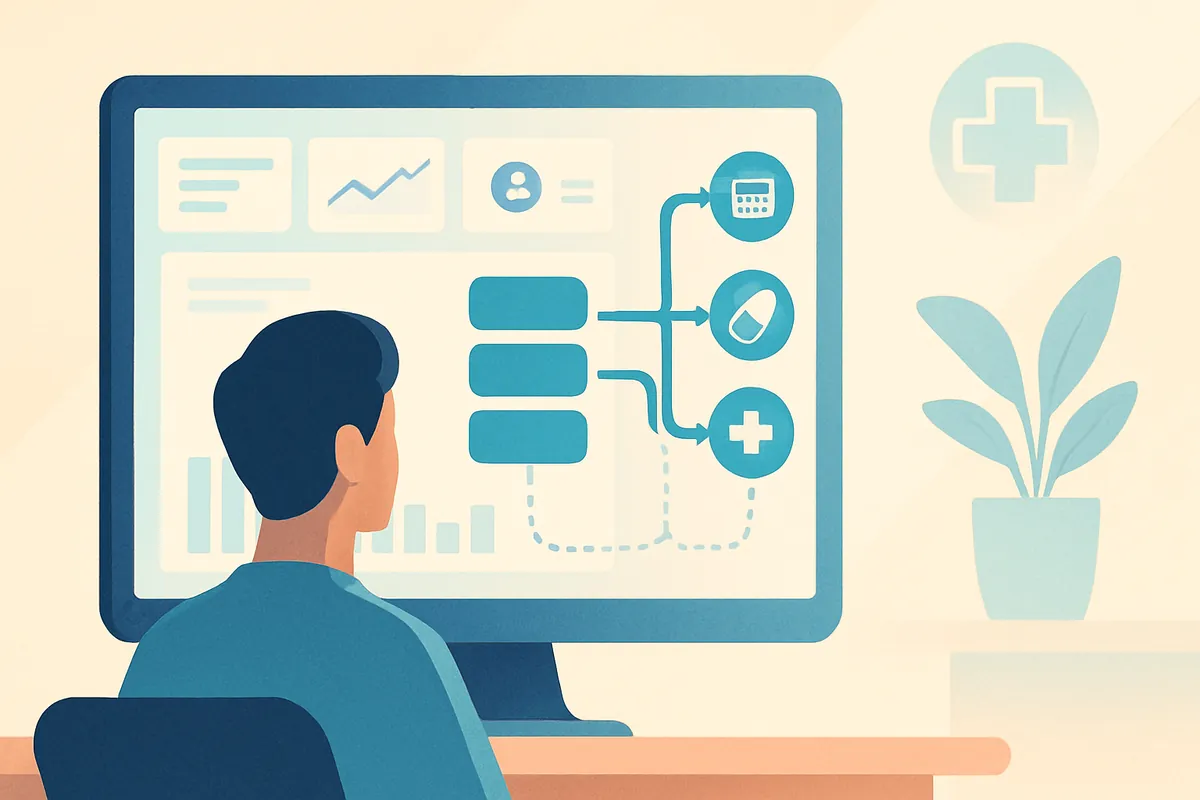
A treatment center can run great campaigns and still lose admissions if its CRM is the wrong fit. The CRM is where every inquiry lands, where admissions staff work the pipeline, and where leadership looks to understand return on marketing spend. Choose well and the system quietly closes the loop from first contact to admission. Choose poorly and leads stall, data fractures, and no one can say which marketing actually filled beds.
This guide explains what a CRM does for a treatment center, how the main platforms differ, what integration actually means, the criteria that matter most, and the mistakes to avoid. It is meant to help you decide, not to sell you a particular product.
What a CRM does for a treatment center
CRM stands for customer relationship management, but in behavioral health the better mental model is "admissions relationship management." A treatment center CRM typically handles:
- Lead capture, routing, and referral tracking. Every inquiry from phone, form, chat, or referral sources lands in one place and routes to the right admissions team member quickly, helping centralize all inquiry data. A CRM helps streamline this initial handoff.
- Pipeline stages. Inquiries move through defined stages (new inquiry, verification of benefits, clinical review, scheduled, admitted) so nothing is dropped. Teams can automate reminders for consistent automated followup at each stage.
- Communication history. Calls, texts, and emails are logged against each contact so any team member can pick up the conversation.
- Reporting. Leadership can see volume, conversion rates by stage, and, when marketing data is connected, cost per qualified inquiry and per admission by channel.
Some platforms are purpose-built for behavioral health and mental health treatment programs and integrate with electronic health records (EHR). Others are general-purpose CRMs adapted to the workflow. Both can work; the right answer depends on your stack and your needs.
The main platforms, and how they differ
Treatment centers most often evaluate a mix of behavioral-health-specific systems and general CRMs:
- Kipu is widely used as a behavioral health EMR and CRM, strong on the clinical and admissions side and common in residential and detox settings.
- Sunwave offers an integrated software platform spanning CRM, EMR, and billing, aimed at running the whole patient journey in a unified system.
- Dazos focuses on behavioral health CRM and analytics, often chosen for sales-style admissions pipelines and reporting.
- Salesforce is a general-purpose enterprise CRM with deep customization and integration options, powerful but requiring configuration and, often, an implementation partner.
- HubSpot is a general-purpose CRM and marketing platform known for ease of use and strong marketing tooling, popular where the marketing and admissions workflows are tightly linked.
The behavioral-health-specific tools tend to fit the clinical and compliance workflows of addiction treatment centers, substance use programs, and other behavioral health facilities out of the box. The general-purpose tools tend to offer more marketing flexibility and integrations but need more setup to match a treatment workflow. There is no single best choice, only the best fit for how your center operates.
What "integration" actually means
A CRM in isolation is a contact list. The value appears when it is connected to the rest of your marketing and admissions stack. Integration usually means wiring together:
- Website and forms, so every submission creates or updates a CRM record automatically, with no manual re-keying.
- Call tracking, so phone inquiries arrive with their marketing source attached rather than as anonymous calls.
- Source and campaign data, so each lead carries its source, medium, and campaign into the CRM. This is the link that lets you tie admissions back to marketing.
- EMR and billing, where appropriate, so the journey from inquiry to admission to patient care is continuous.
- The reporting dashboard, so spend, qualified inquiries, and admissions appear together rather than in separate tools.
Done right, integration creates a single source of truth: marketing and admissions finally describe the same events with the same data.
Criteria that matter most
When comparing platforms, weigh these against your own situation rather than chasing feature lists:
- Fit to your admissions workflow. Can the pipeline stages, fields, and automations match how your team actually works, without heavy custom development?
- Speed-to-lead. How fast can a new inquiry reach a human? In admissions, minutes matter, and the difference between an admit and a miss is often who responded first.
- Integration with tracking. Will it accept source and campaign data and connect to call tracking, so reporting reaches all the way to admissions?
- Reporting depth. Can leadership get the conversion and cost metrics they need without exporting to spreadsheets?
- Privacy and security posture. Because the CRM holds protected health information (PHI), the vendor should support a Business Associate Agreement (BAA) and appropriate safeguards.
- Total cost and implementation effort. Licensing is only part of it. Configuration, training, and ongoing administration are real costs, and general-purpose platforms often need more of all three.
- Adoption. The best system is the one your team will actually use. A simpler tool fully adopted beats a powerful tool half-used.
Common mistakes
- Buying features instead of fit. A platform that wins a feature comparison can still be the wrong fit if it does not match your workflow or your team's skills.
- Skipping the integration plan. Choosing a CRM without deciding how website forms, call tracking, and source data will flow into it leaves you with a disconnected island.
- Ignoring speed-to-lead. Routing rules and automation that get a hot inquiry to a specialist immediately often matter more than any single feature.
- Underestimating implementation. Especially with enterprise platforms, the configuration and training effort is frequently larger than expected. Budget for it.
- Treating compliance as an afterthought. A CRM holds sensitive data. Confirm BAA support and security controls before, not after, you migrate patient information.
A practical sequence
If you are starting fresh or fixing a messy setup, a sensible order is: map your admissions workflow first, choose the platform that fits it, then plan integration with your website, forms, and call tracking, then configure reporting, then train the team and migrate carefully. Picking software before mapping the workflow is the most common way these projects go sideways. When the setup is right, a CRM improves operational efficiency for both admissions and marketing teams.
Prefer to have this configured and integrated for you? See our CRM integration service for rehab centers, or see how it connects with the rest of your drug rehab SEO and marketing.

Book a free, no-pressure call with the specialists who would run your marketing. You get a clear plan and an honest quote, whether or not we work together.
Frequently asked questions
What is the difference between a CRM and an EMR for a treatment center? A CRM manages the relationship and pipeline from first inquiry through admission, focused on conversion and reporting. An EMR manages clinical records, treatment plans, and care delivery. Some behavioral health platforms combine both; others specialize, and are then integrated together.
Which CRM is best for a treatment center? There is no single best CRM. Behavioral-health-specific systems like Kipu, Sunwave, and Dazos fit clinical and admissions workflows out of the box, while general platforms like Salesforce and HubSpot offer more flexibility and marketing tooling with more setup. The right choice depends on your workflow, stack, and team.
Do I need to integrate my CRM with call tracking? If you want to know which marketing produces admissions, yes. Without source and campaign data flowing in from your website, forms, and call tracking, the CRM cannot tie admissions back to the marketing that earned them.
Is a treatment center CRM HIPAA-aligned? It can be, when the vendor supports a Business Associate Agreement and the system is configured with appropriate safeguards. Compliance depends on configuration and process, so involve your compliance team. This is general guidance, not legal advice.
Can I switch CRMs without losing my data? Yes, with planning. A careful migration maps fields, preserves communication history, and tests the integrations before cutover. The risk comes from rushing the migration, not from switching itself.
Sources
- LegitScript, Addiction Treatment Certification overview (context on behavioral health marketing standards): https://www.legitscript.com/certification/addiction-treatment-certification/
- HHS Office for Civil Rights, HIPAA guidance on protecting PHI: https://www.hhs.gov/hipaa/for-professionals/privacy/guidance/hipaa-online-tracking/index.html