



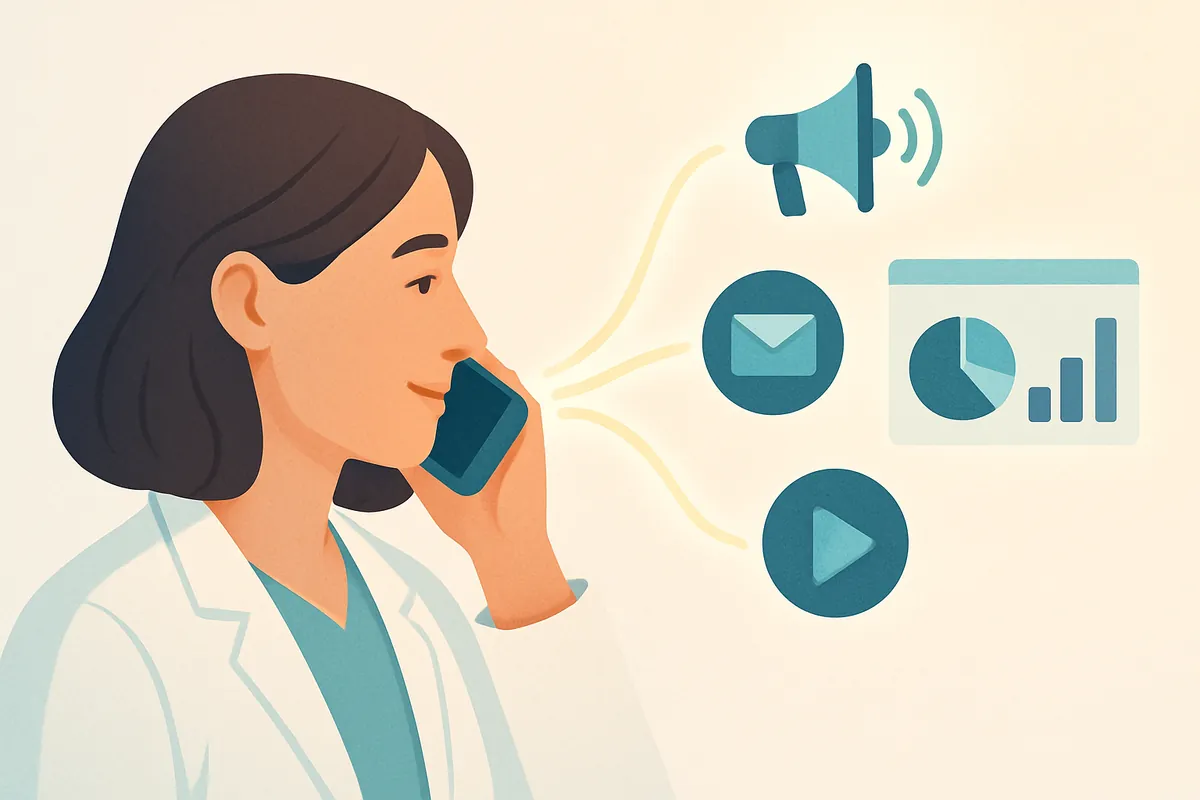
Most people who reach out to an addiction treatment center do it by phone. They have read a page, watched a video, or talked to a family member, and when they are finally ready, they call. That makes the phone the single most important conversion point in behavioral health marketing, and it is also the one most centers cannot measure. If you cannot tell which campaign, keyword, or page produced a call, you are funding your drug rehab marketing on guesswork.
This guide explains, in plain terms, how call tracking and marketing attribution work, what they can and cannot tell you, the common mistakes centers make, and how to keep the whole system privacy-conscious. It is written for marketing directors and admissions leaders, not engineers.
What call tracking actually is
Call tracking assigns unique phone numbers to your marketing sources so that when someone calls, the system records which source produced that call. Instead of one main line that mixes every inquiry together, you get attribution at the call level.
There are two broad approaches:
- Static numbers. A dedicated tracking number is placed on one channel, such as a billboard, a Google Business Profile, or a specific landing page. Every call to that number is credited to that source. Simple and reliable, but coarse.
- Dynamic number insertion (DNI). A small script on your website swaps the phone number shown to each visitor based on how they arrived. One pool of numbers can then distinguish the paid search visitor from the organic visitor from the referral visitor, in real time, with no change to your published main line.
DNI is what lets a center say "this admission started with a non-branded search for detox in our city," rather than just "someone called the office."
How attribution connects a call to a campaign
Attribution is the discipline of assigning credit for an inquiry to the marketing that earned it. Call tracking supplies the phone half of that picture. The other half comes from web analytics and UTM parameters, the tags added to a link (source, medium, campaign) so analytics can record where a click came from.
When DNI, UTM tagging, and form tracking are wired together, the system can follow a person from first click to phone call to, where your admissions data allows, an actual admission. That end-to-end view is what turns marketing from a cost center into something you can manage by results.
Single-touch versus multi-touch
Attribution is not one number, it is a choice of model, and the model changes the story:
- First-touch gives all the credit to the first interaction. Good for understanding what creates awareness, blind to what closes.
- Last-touch gives all the credit to the final interaction before the call. Simple and popular, but it routinely undervalues the awareness channels that started the journey.
- Multi-touch spreads fractional credit across every touchpoint. According to research summarized by HubSpot and others, buyers commonly interact with around six touchpoints before converting, which is exactly why single-touch models can mislead a budget.
For most treatment centers, a long and emotional decision process means a family may see an ad, read a blog post, check reviews, and only then call. If you judge the blog post by last-touch alone, you will starve the very content that made the call possible.
What good call analytics tell you
Tracking the call is the start. The value comes from what you learn after it connects:
- Call quality and qualification. Not every caller is a prospective patient. Some are vendors, current patients, or wrong numbers. Scoring calls as qualified or unqualified keeps your cost-per-lead honest.
- Channel performance. Which sources produce qualified inquiries, and at what cost. This is where you find the campaigns quietly wasting budget.
- Speed and handling. Missed calls, hold times, call routing delays, and after-hours gaps are admissions lost before anyone sees a form. Call center reporting surfaces these gaps.
Where your center is comfortable sharing outcome data, you can move from cost per qualified inquiry toward cost per admission by channel, which is the metric leadership actually cares about.
Common mistakes centers make
- Measuring clicks instead of calls. A campaign can look great on clicks and produce no qualified phone inquiries. Without call tracking, you never see the gap.
- One number everywhere. A single main line on every channel makes attribution impossible. The fix is source-level numbers, not more spreadsheets.
- Ignoring the form-to-CRM handoff. If tracked calls and tracked forms do not flow into your CRM or EMR, the admissions workflow has no marketing context and ROI stays unknowable.
- Treating attribution as truth instead of a model. Attribution is a useful estimate, not a law of physics. Pick a model, stay consistent, and use it to compare periods rather than to win arguments.
- Bolting on tracking without privacy review. In behavioral health, this is the mistake that creates real exposure, covered next.
Keeping call tracking privacy-conscious
Treatment centers handle protected health information (PHI), and HIPAA compliance requirements around digital tracking have tightened. The HHS Office for Civil Rights issued guidance on online tracking technologies (originally December 2022, updated March 2024), and although a Texas federal court vacated part of that guidance in June 2024, the underlying duty to protect PHI under HIPAA has not changed. Separately, the FTC has brought enforcement actions against health companies, including GoodRx and BetterHelp, for sharing sensitive health data with advertising platforms without proper consent.
The practical takeaways for call tracking:
- Use vendors that will sign a Business Associate Agreement (BAA) where PHI may be involved, and configure settings to limit what is captured and shared.
- Be deliberate about call recording, transcription, and any data passed to ad platforms.
- Treat your tracking stack as part of your compliance posture, not a separate marketing toy. Work alongside your legal or compliance team. This is readiness guidance, not legal advice.
We use "HIPAA-aligned" rather than claiming any tool is automatically "HIPAA-compliant," because compliance depends on how the whole system is configured and operated, not on a single product.
Putting it together
A working attribution system for a treatment center has four connected parts: dynamic call tracking on the website, UTM tagging on every campaign link, form tracking, and a CRM or EMR, whether that is Salesforce, a behavioral-health-specific system, or your existing admissions tool, so source data sits next to admissions data. The call tracking software handles the number pool and session matching automatically. Built well, this system answers the only question that matters: which marketing earns real admissions, so you can spend more on what works and stop funding what does not.
Prefer to have this handled by specialists? See our Call Tracking and Attribution service for rehab centers, or explore how it fits with drug rehab SEO.

Book a free, no-pressure call with the specialists who would run your marketing. You get a clear plan and an honest quote, whether or not we work together.
Frequently asked questions
What is the difference between call tracking and attribution? Call tracking captures which source produced each phone call using unique numbers. Attribution is the broader practice of assigning credit for an inquiry across all the marketing touchpoints involved, including clicks and forms. Call tracking feeds attribution.
Does call tracking change my main phone number? No. Dynamic number insertion swaps numbers only for tracking purposes on your website. Your published main line stays the same, and calls still ring to your admissions team.
Can call tracking be done in a HIPAA-aligned way? It can, when configured carefully following best practices for vendor selection and data minimization, and supported by a Business Associate Agreement where PHI is involved. Compliance depends on configuration and process, so coordinate with your compliance team rather than assuming any tool is compliant by default.
Which attribution model should a treatment center use? Because admissions decisions involve many touchpoints over time, a multi-touch view usually reflects reality better than last-touch alone. The most important thing is to pick a model and apply it consistently so you can compare periods fairly.
How do you connect a phone call to an actual admission? By passing tracked calls and tracked forms, with their source and campaign data, into your CRM or EMR, then matching those records against admissions. This closes the loop from click to call to admission.
Sources
- HHS Office for Civil Rights, Use of Online Tracking Technologies by HIPAA Covered Entities and Business Associates: https://www.hhs.gov/hipaa/for-professionals/privacy/guidance/hipaa-online-tracking/index.html
- Holland & Hart, Court Vacates HIPAA Online Tracking Guidance (June 2024): https://hhhealthlawblog.com/court-vacates-hipaa-online-tracking-guidance/
- Federal Trade Commission, action barring GoodRx from sharing health info for advertising: https://www.ftc.gov/news-events/news/press-releases/2023/02/ftc-enforcement-action-bar-goodrx-sharing-consumers-sensitive-health-info-advertising
- HubSpot, A Look at Multi-Touch Attribution and Its Various Models: https://blog.hubspot.com/marketing/multi-touch-attribution